The Muumuu, Reconsidered: A Short History of Hawaii’s Most Misunderstood Dress

Say “muumuu” on the mainland and most people picture something shapeless. In Hawaii, the word carries a very different weight: a garment with royal history, generations of family celebrations, and — when it is cut well — one of the most quietly elegant silhouettes a woman can wear.
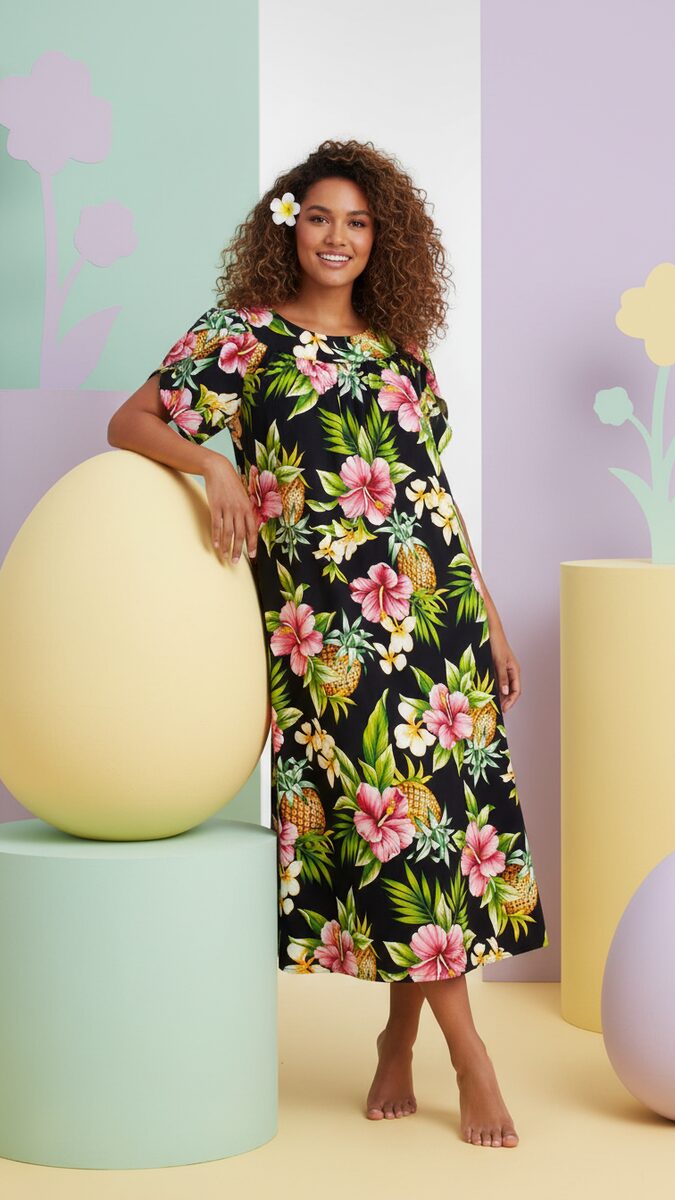
From Court Dress to Family Heirloom
The muumuu descends from the holoku, the formal gown adapted in the early 1800s when Western missionary dressmaking met Hawaiian sensibilities. The holoku kept its train and its ceremony; the muumuu became its relaxed everyday cousin — loose, cool, and suited to island heat. The name itself, often translated as “cut off,” refers to the fact that the earliest versions were made without a fitted yoke at all.
By the mid-twentieth century, island fabric houses were printing rayon and cotton with hibiscus, plumeria, and breadfruit motifs, and the muumuu became the dress of graduations, church, and Sunday dinners. It was never meant to be a costume. It was meant to be lived in — which is exactly why so many families still have one folded in a drawer that belonged to a grandmother.
What Makes a Good Muumuu Today
Three things separate a keepsake from a souvenir.
- The fabric. A soft rayon or a mid-weight, 100% cotton that moves when you walk rather than one that feels papery or clings.
- Pattern matching. On a well-made dress the print lines up at the side seams — a small detail that signals a careful cutting room rather than a mass-cut import.
- The yoke. The gathered or smocked panel across the chest should sit flat and let the body of the dress fall freely from it, without pulling at the shoulder seam.
A muumuu should feel like trade winds, not like a tent. The difference is entirely in the cut of the shoulder and the fall of the fabric.
Muumuu Sizing Runs Differently — Here’s Why
If you have only ever bought fitted dresses, muumuu sizing will feel unfamiliar at first.
Because the silhouette is meant to skim rather than hug, a well-made muumuu is cut with several inches of ease through the hip and waist by design — that is not the same as buying “roomy” out of caution. Go by bust measurement first, and expect the rest of the dress to fall loose. Sizing down to chase a fitted look usually just pulls the yoke tight across the shoulders, which is the one place this dress should never pull.
Muumuu Myths, Retired
Two assumptions do this dress a disservice. The first is that it’s shapeless — in fact a good yoke and a well-hung hem create real shape, it is simply not a corseted one. The second is that it’s costume-y or dated. In practice it is one of the few garments that reads as appropriate at a child’s graduation, a beach cookout, and a 90th birthday lunch, often on three generations of the same family at once.
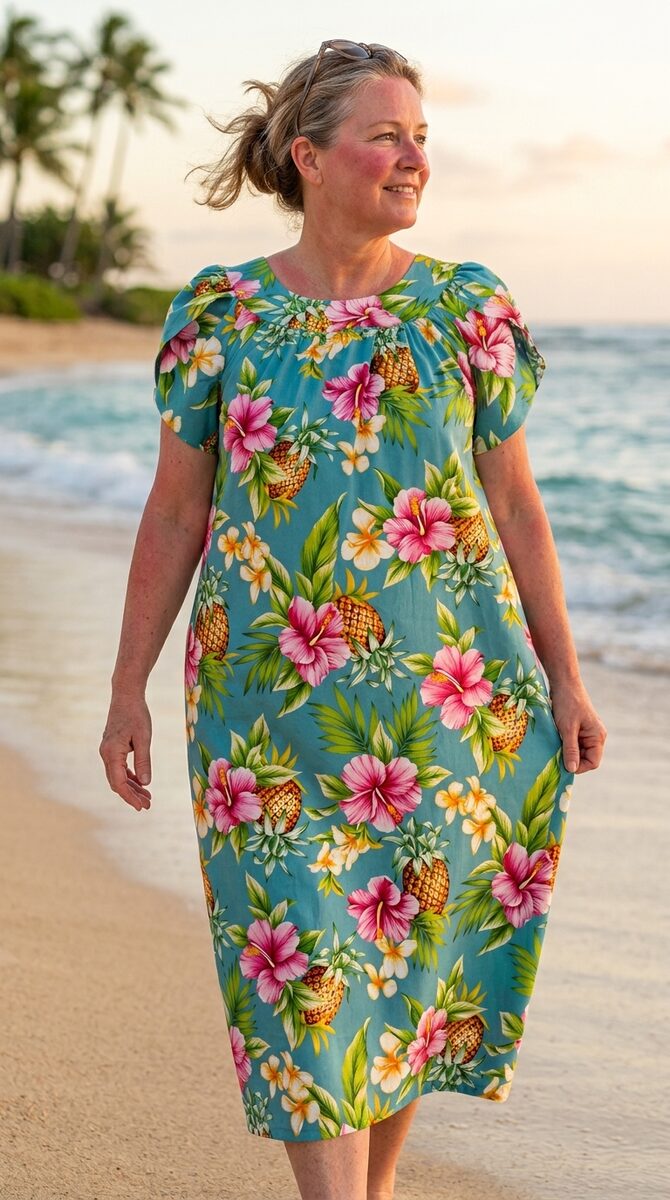
How to Wear It Now
Modern muumuu cuts are shorter and lighter than their 1960s ancestors. A knee-length cotton muumuu with a defined yoke works for brunch or a garden party; a full-length version in a dark print is genuinely formal enough for an evening out. Pair either with flat sandals and let the print do the talking — this is not a dress that needs much accessorizing.
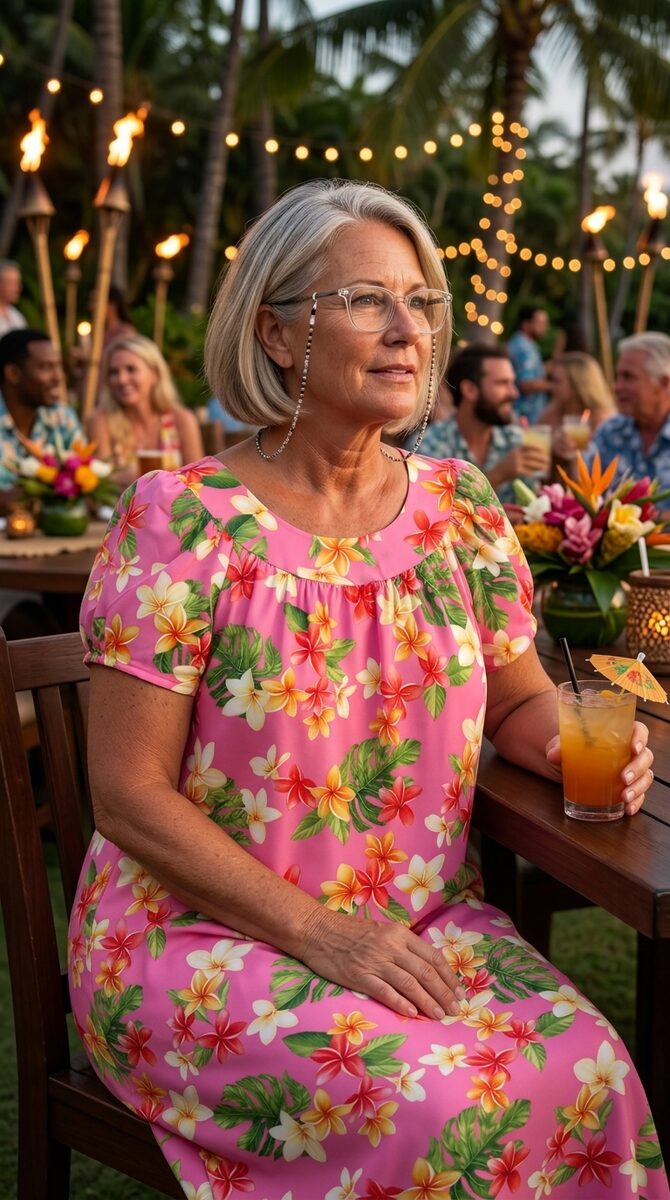
Where to Start
If you are new to the style, start with a classic, true-to-tradition cotton muumuu — easier to match, easier to wear, and made in Hawaii. Our fabric guide covers the rayon-versus-cotton question in depth if you’re deciding between a muumuu and a lighter, more fluid style.