Rayon or Cotton? The Hawaiian Dress Fabric Guide
Every Hawaiian dress question eventually becomes a fabric question. The same silhouette in rayon and in cotton is two different dresses: one pours, one holds. Neither is better — but one is better for you, and this guide will tell you which. Most fabric guides you’ll find online are written for men’s aloha shirts; the drape math works differently once you’re talking about a hem that has to move.
Rayon: The Drape
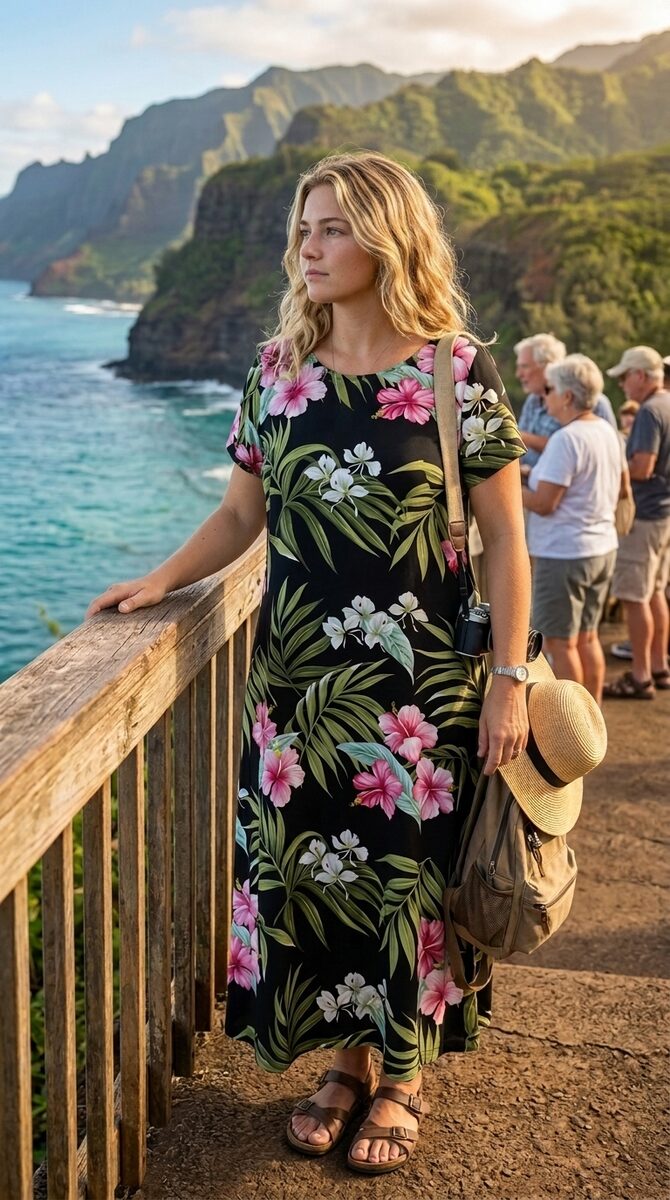
Classic island rayon is soft, fluid, and slightly heavy in the hand — that weight is what makes it swing. Prints on rayon look saturated and slightly luminous, which is why most vintage-style dresses use it. It breathes well, packs small for travel, and resists holding sharp wrinkles once it relaxes on the body.
The trade-off: rayon dislikes hot dryers and careless ironing, and it can feel almost too fluid in a stiff wind. Wash cool, hang dry, iron on the reverse with low heat.
Cotton: The Structure
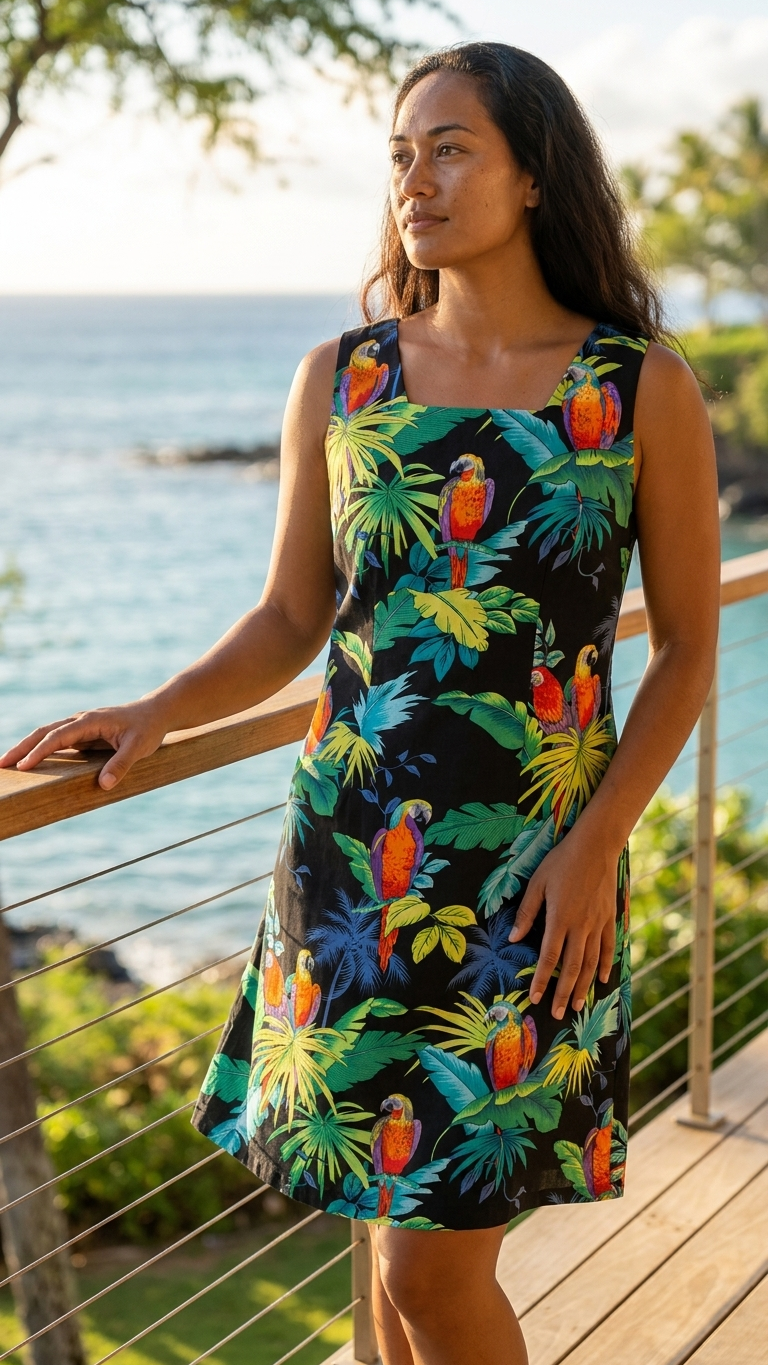
Cotton holds a silhouette. A-line, tank, and muumuu-style dresses keep their shape all day in cotton, and it takes hard washing without complaint. Prints read crisper and slightly more matte. For hot, humid days, a light cotton poplin is the coolest thing you can wear that still looks put together.
The trade-off: cotton creases, and a tightly woven cotton can feel stiff for the first few wears before it softens with washing.
The 10-Second Crush Test
You can usually tell the two apart on the rack without reading a single tag. Scrunch a handful of the skirt in your fist for ten seconds, then let go. Cotton holds a visible crease — that’s the same structure that keeps an A-line dress standing away from the body. Rayon springs back into soft, rounded folds rather than sharp lines, because the fiber doesn’t hold a crease the way cotton does. Neither result is a flaw; it just tells you which dress you’re holding.
| If you want… | Choose |
|---|---|
| Movement, evening polish, a vintage feel | Rayon |
| Structure, easy care, daytime crispness | Cotton |
| A handkerchief or bias-cut hem to swing properly | Rayon, almost always |
| A smocked sun dress or muumuu you’ll wear weekly | Cotton, for durability |
| One dress for a full week of travel with minimal ironing | Rayon, packed rolled not folded |
Reading a Label Like an Islander
Look for pattern matching at side seams and French or overlocked seams inside on quality pieces. A well-made flowing dress should feel cool and light at once; a good structured cotton should feel substantial and dry rather than papery. When in doubt, check the size chart and fabric content listed on each product page before you order — a size that’s true-to-fit in cotton can run a touch differently in a fluid rayon cut.
Shop Flowing Handkerchief Hem Styles → Shop 100% Cotton Muumuus →